
Now that the 2023-24 school year is drawing to a close, it is time to look back at the outreach visits to schools I’ve done as part of my job at Clark Planetarium. I am a full-time Education Program Specialist, which means I get involved in all sorts of educational programs, but my most frequent assignment is to visit elementary and middle schools to teach about the solar system and to fulfill the Utah Science with Engineering Education (SEEd) standards for 4th and 6th grade space science. The standards for 4th grade include learning that the sun is a star like other stars and is so bright because it is so close, and to learn about what causes the cycles of day and night and the changes in constellations during a year. These are both caused by the different motions of the Earth as it rotates around its axis and revolves or orbits around the sun. The 6th grade standards including knowing what causes the seasons, phases of the moon, and eclipses; the role of gravity and inertia in the orbits of the planets; and the scale, proportions, and properties of the planets and other solar system objects.
The 4th grade lesson is about 45 minutes long and designed to be longer or shorter if needed and involves two activities that get students up out of their chairs. The first has them be the Earth (specifically their heads) and I hold up a spiky yellow ball as the Sun, having them play Simon Says to face noon, sunset, midnight, and sunrise to see that the Sun’s apparent motion across the sky is caused by the rotation of the Earth,not the movement of the Sun. The second activity models how the stars change – it is about how the Earth orbits the Sun and faces different directions at night at different times of the year. I have the students stand in a circle and march around counterclockwise, with each wall a different seasonal constellation (Orion for winter, Virgo for spring, Scorpius for summer, and Aquarius for fall). I also explain the zodiac constellations as being Sun signs, or the constellation the Sun is in when a person is born.
For the 6th grade we have three lessons. One uses golf balls with large nails hammered in them and coated with fluorescent paint held up to UV LED lights we hang in the classroom. As the balls glow in the black light, we have students rotate around to see how the light visible on the Moon changes during the month, then draw a diagram of this and label the phases. I also do a little kinesthetic physical model to show why eclipses only happen twice a year and why we only see them in a particular location occasionally. Last fall was the first umbral shadow of a solar eclipse to cross Utah in my memory.
The second 6th grade lesson is about the scale and proportions of the solar system. We start with photos taken by Voyager 1 in 1990 of the visible planets and lead into how big the solar system is, since the Pale Blue Dot is such a tiny photo of Earth. Then we build a scale model on paper using the distances to the planets from the Sun in Astronomical Units. We show them a kinesthetic model where ten students find their correct places on a rope marked off in AU. Then we compare the sizes of the planets, classify them as inner and outer or as rocky vs. gas. This takes about 45 minutes.
The final lesson, often used as an add-on to the scale and proportion lesson, is to talk about how gravity and inertia are both essential for planetary orbits. Previously, this was shown by opening up Universal Sandbox and turning on and off planetary and sun properties, such as the orbital velocity of a planet or deleting the Sun. It is fun to see all of the planets taking off in a straight line out the the solar system with Mercury leaving the fastest. The only problem is that when paired with solar system scale and proportion, it is a lot of us standing and talking while students sit and listen. So I built a string model of the planet orbits (at least the first four) as I learned from the MAVEN workshop in 2015. I worked out all the distances and lengths of the orbits, tied my good string into circles, and used Sharpie pens to mark off the distances the planets travel every two weeks. I use this to show that the planets don’t all line up, that they orbit at different speeds, and that this is all about how closely the planets orbit the Sun. I have the students imagine the same things as using Universal Sandbox, but this time have five students involved with the rest counting out the two weeks or acting as constellations. I can use this model to explain why it would take 30 months for a human mission to Mars and why Mars shows retrograde motion every 26 months, although there is usually not enough time nor is this part of the 6th grade standards. All told, this add-on for gravity and inertia takes about 15 minutes.
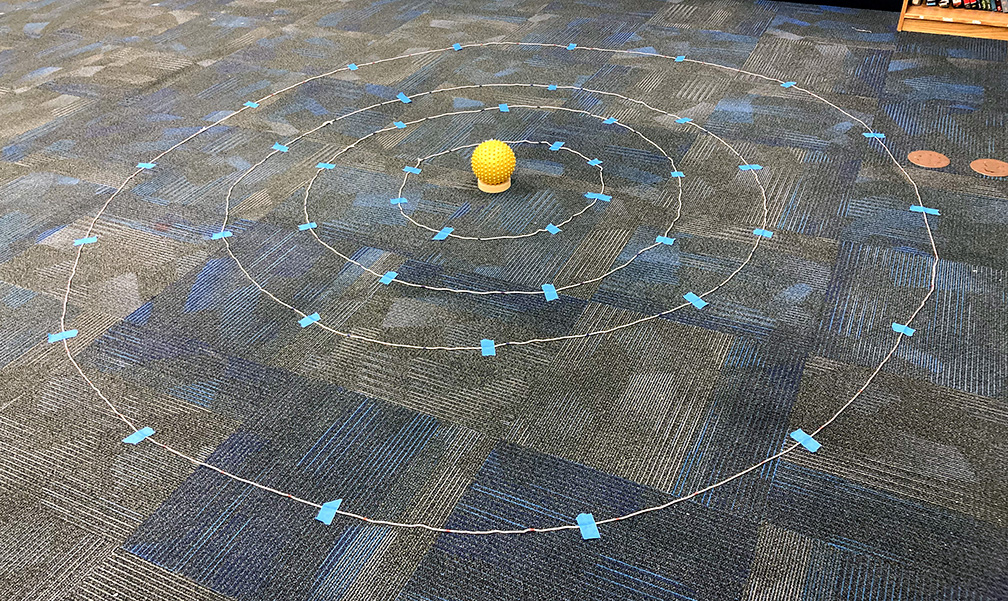
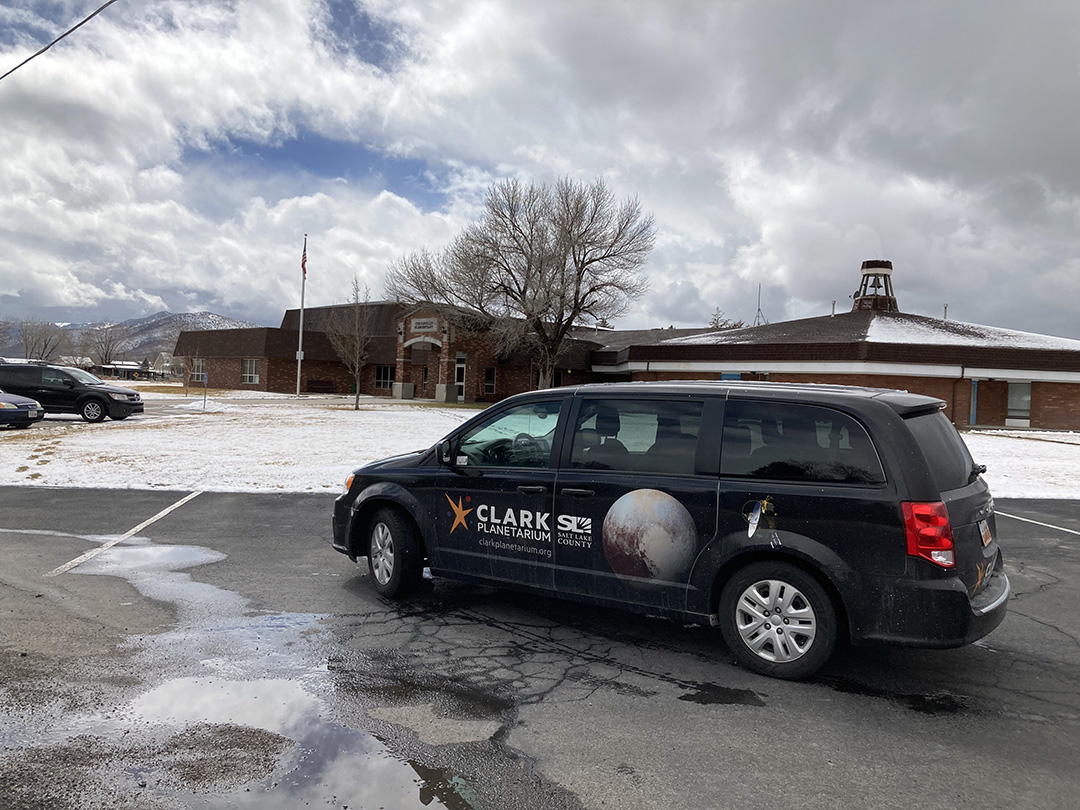
The string model worked well and got great reviews from teachers, but was a pain to set up and tape down each time. My manager, Jason, saw me using it during a joint visit we did and liked it well enough to use some extra year-end money to create the model as a diagram that I made, which was vastly improved up by our graphic designer, Shane. This diagram was then printed on 10-foot square vinyl mats that we can roll up, put in a bag, and unroll when we need them, taking less than five minutes to set up compared with the 15 it was taking before. We have one in each of our outreach vans. We got the mats in just after Christmas and started using them in our visits in January. It works very well and several teachers have asked to buy their own school version.
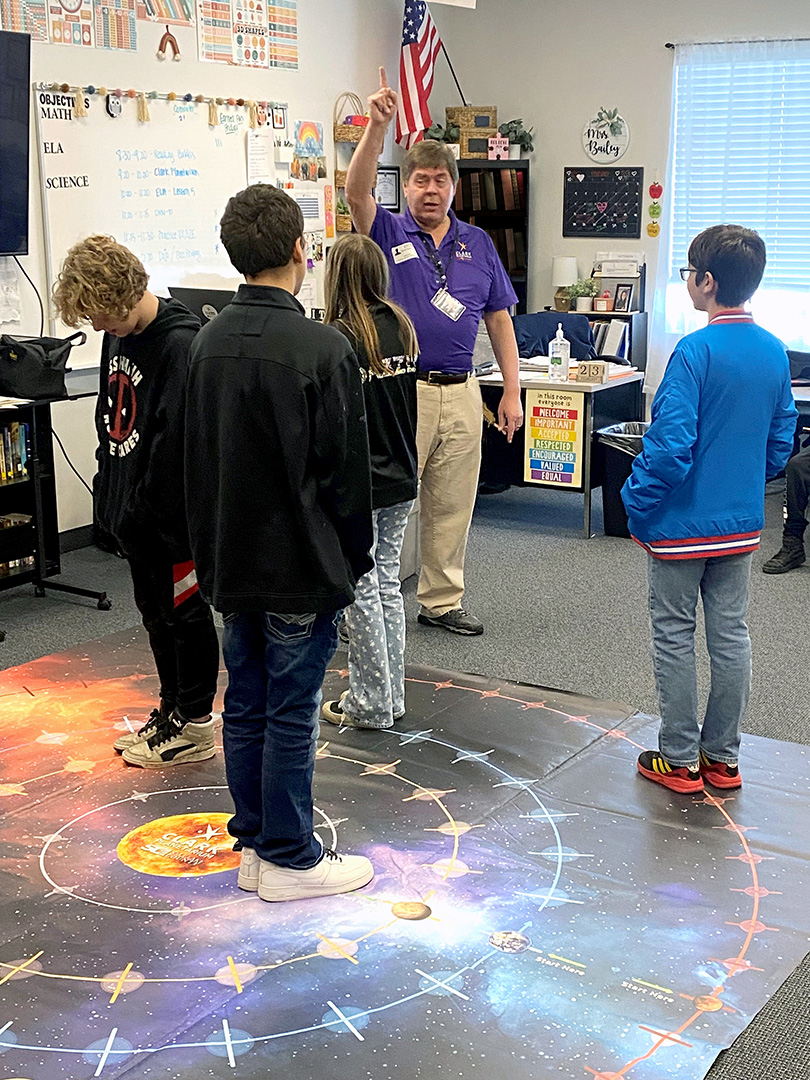
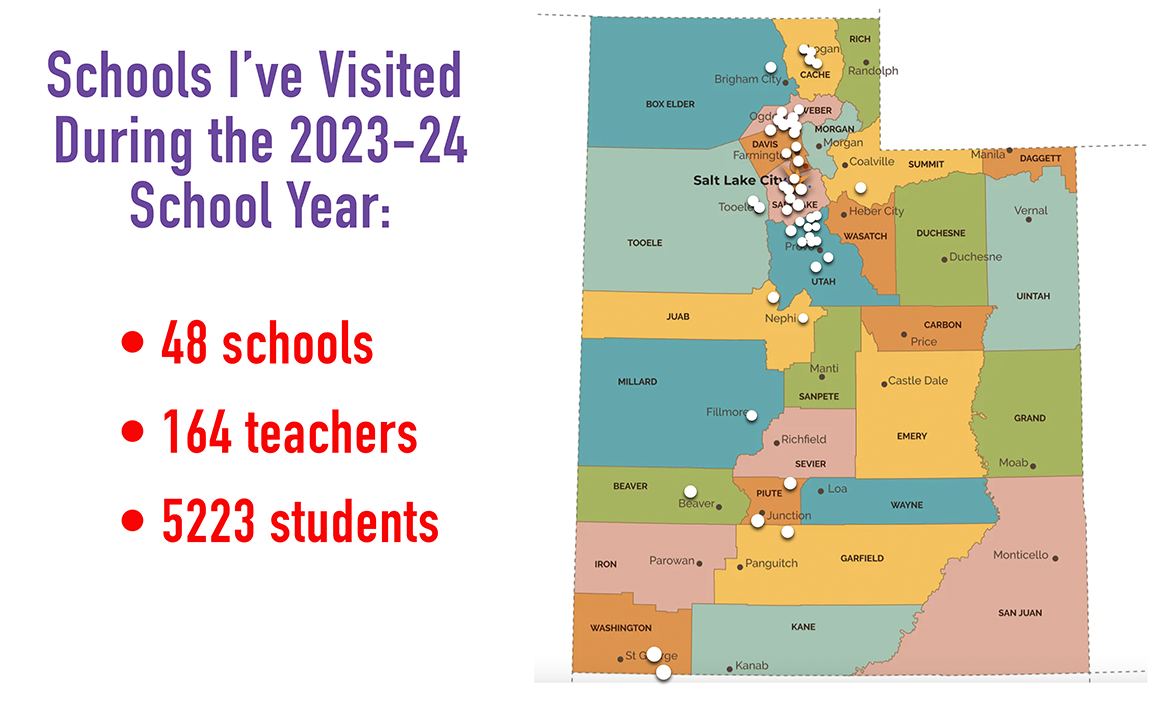
I have visited 48 schools this year and have taught in the classrooms of 164 teachers and presented to 5223 students. At a conservative estimate, as a classroom teacher I have taught perhaps 3000 students over 33 years; I have taught more students in this one year than I have in all my other years combined. True, it is only for an hour, but I hope we made an impact. Evaluations have been very positive, although we still need to do more kinesthetic activities. I am working on that. We have other presenters that I sometimes pair up with and other times I am out alone.
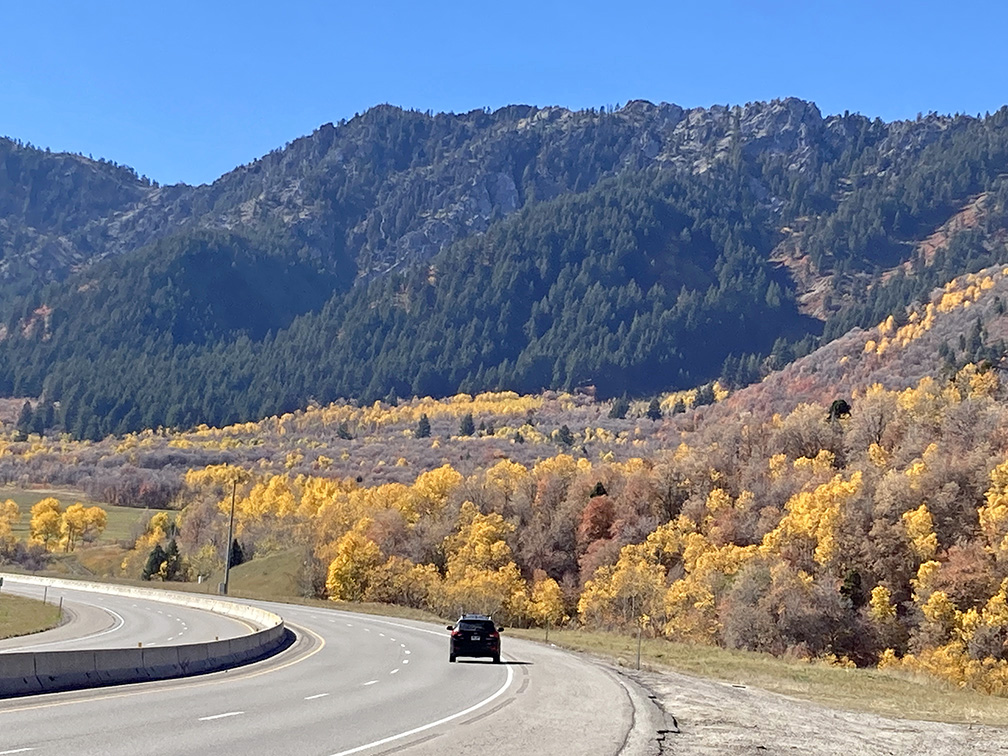
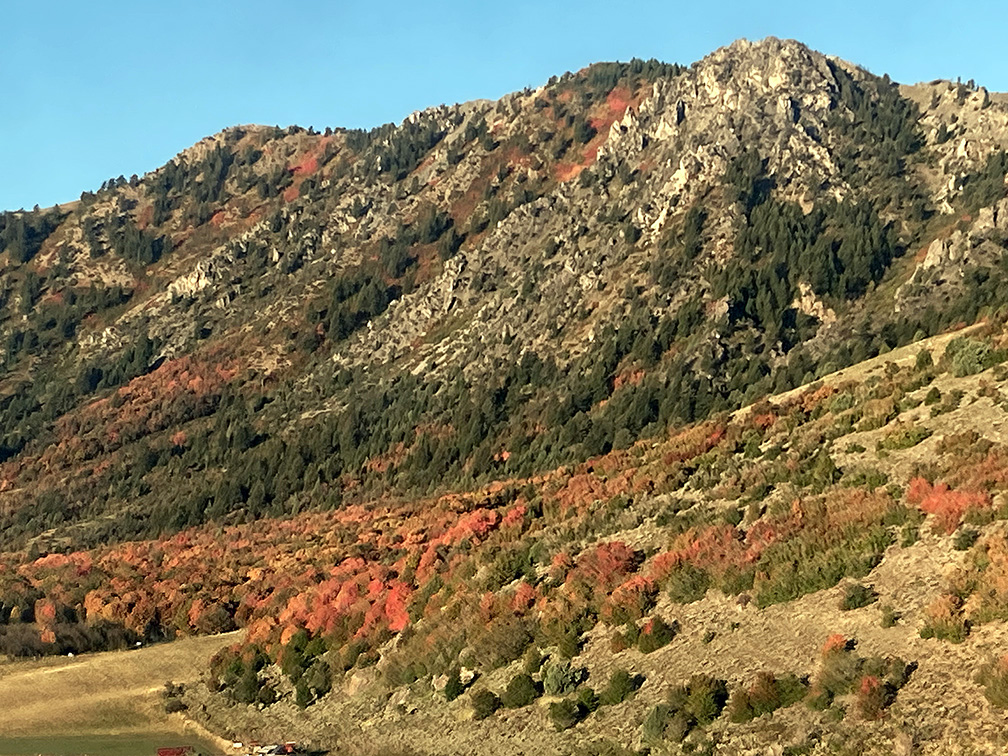
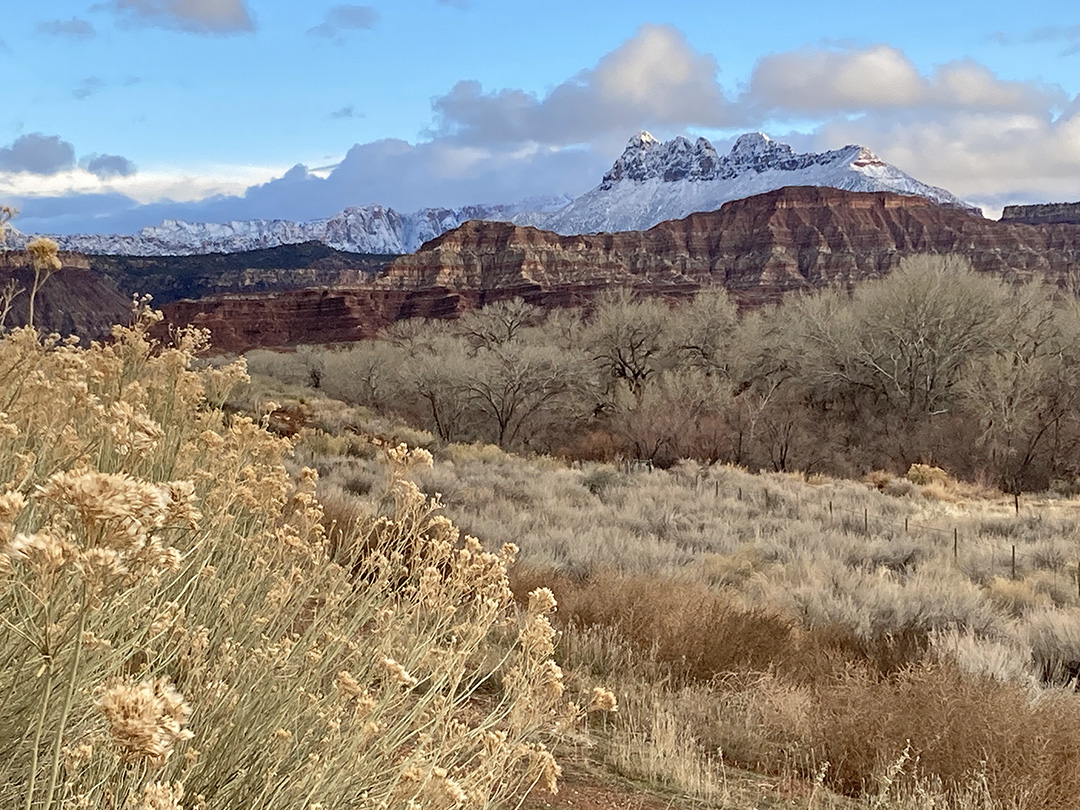
On three occasions this year I went on long outreach visits to southern Utah. The week before Thanksgiving I visited Milford Elementary and Fillmore Middle School, traveling down through my hometown of Deseret. In February I traveled down to Washington County and taught in Water Canyon Elementary in Hillsdale, only a quarter mile from the Utah-Arizona border, then at Hurricane Intermediate School. I stayed in the La Quinta Inn in La Verkin (that sounds funny but it is true). It was cold and snowy most of the time with only occasional moments of sunlight, such as the glimpse of Zion’s Canyon in the distance and the Hurricane Cliffs shown here.
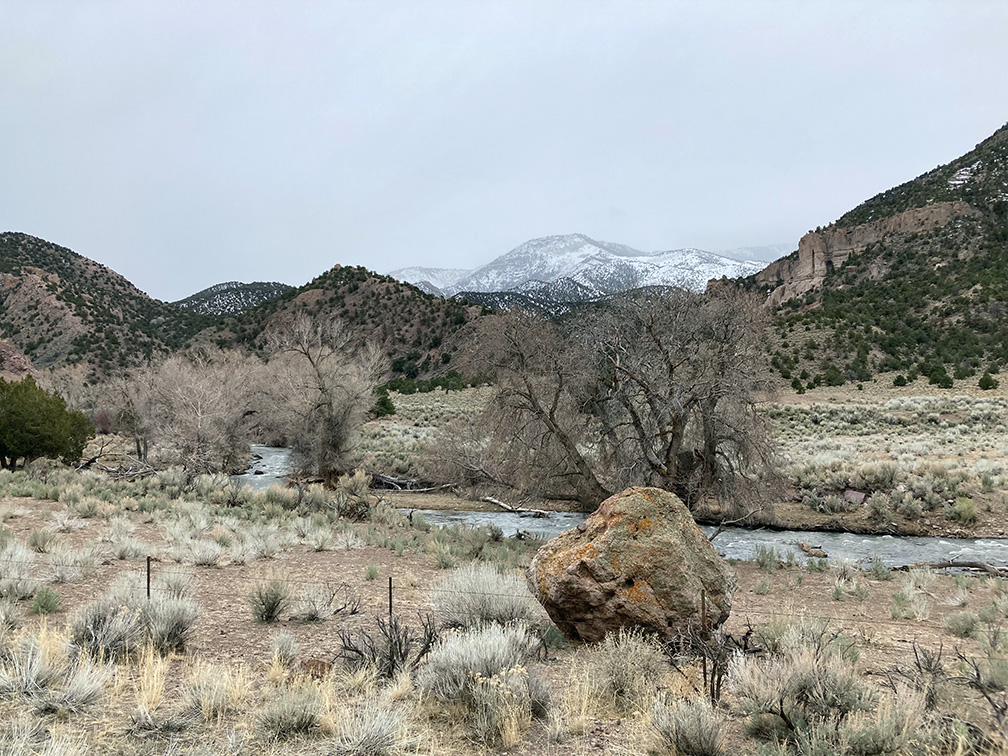
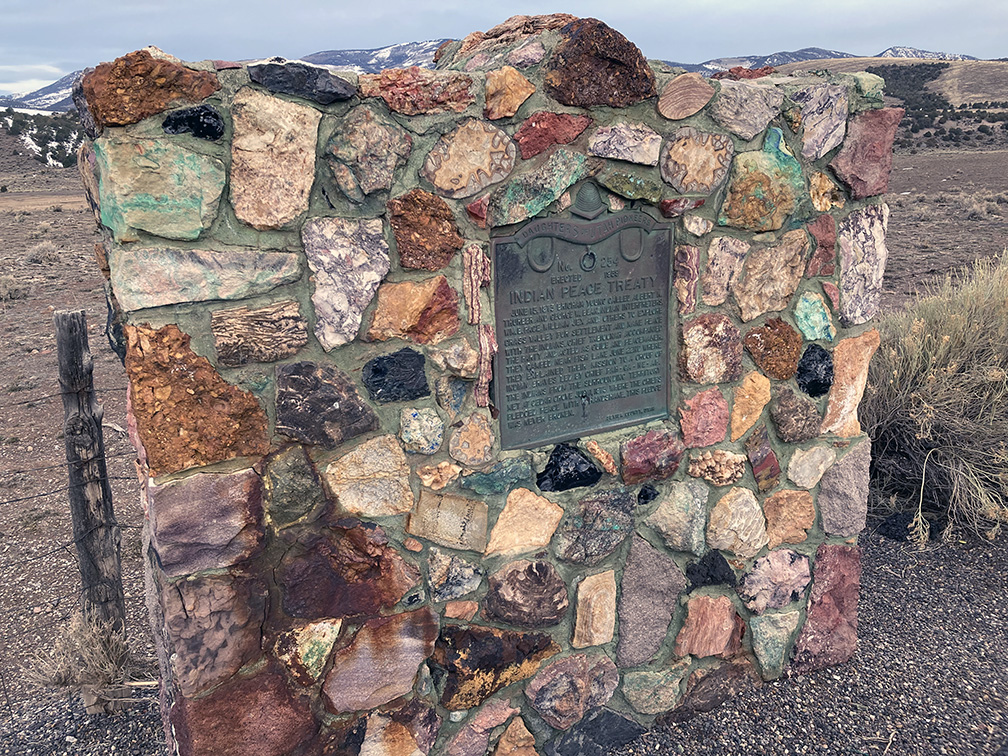
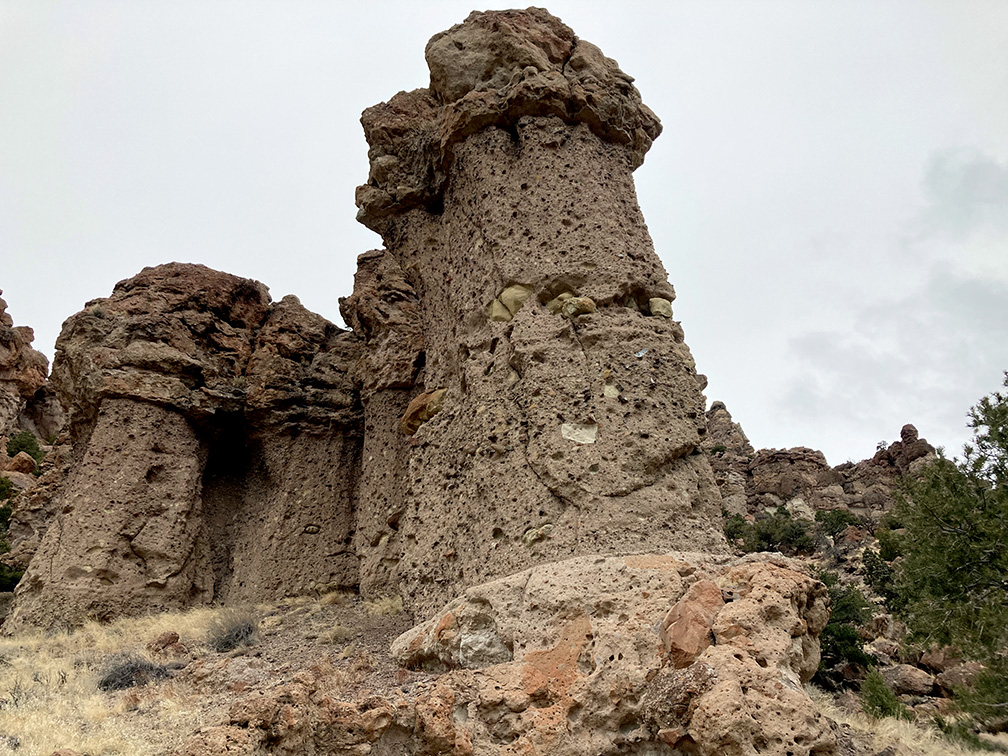
My third trip was to small towns in central Utah, starting with Koosharem Elementary, then Circleville Elementary, and finally Antimony Elementary. All three of these schools feed into Piute High School in Junction. I stayed at a motel in Salina on the way down, then drove the rest of the way to Koosharem the next day. I traveled down past Otter Creek Reservoir and through Kingston Canyon past layer upon layer of volcanic tuff blasted out of the Marysvale caldera over 30 million years ago. The formations were fantastic, with the tuff in all shades of lilac, lavender, purple, pink, and even orange. The east fork of the Sevier River has carved this canyon, existing here before the mountains rose up and the volcano spewed out ash. I stayed the second and third night at the Butch Cassidy Hideout Motel in Circleville (Butch Cassidy grew up on a farm near here and went to school here until he turned outlaw), which I had arranged in advance, but no one was there to check me in and the restaurant was closed. There were instructions on the door to call a number, but my phone wouldn’t work. I traveled back to a small mercantile in town and the owner knew the motel owner and let me use the mercantile’s phone. As it turns out, only Verizon has cell towers in this valley. The motel owner gave me the key code for the door, so I went back and let myself in. I was the only guest at the motel for two nights, which was a bit eerie like something out of a Stephen King novel. Apparently, it is the off season. At least the restaurant was open for breakfast the next day with enough time to drive the few blocks to the elementary school. It had snowed a few inches during the night and it was difficult trying to 4-wheel drive the cart through the slushy snow.
This school’s 6th grade teacher had participated in the Science Communication contest and two students had completed projects with the rest giving peer evaluations. It was fun seeing these students again and also seeing that they had learned a great deal from their projects – they could answer all my questions. I did the 4th grade lesson and all three of the 6th grade lessons, just as I had done in Koosharem the day before. They had me all day, so they might as well get full value. I ate supper of pizza at a place in Marysvale.
The next day I packed up and locked up my motel room and drove back through Kingston Canyon to Antimony. My great-great grandfather’s brother was one of the original settlers, so I am related to some of the people here. The small elementary school there has only ten students, with only one student in each of 4th, 5th, and 6th grades. So I taught those three students all day long, all three lessons with plenty of time for them to ask questions and was still done by 1:00. I ate lunch at a small mercantile/restaurant in Antimony and wanted to get some of their famous pie (as it was 3/14 or Pi Day) but they didn’t have any yet. It was the off season.
I headed home via Hwy 89 past Big Rock Candy Mountain and north on 89 through Salina, Gunnison, Manti, Ephraim, and Mt. Pleasant. I should have stopped at Mom’s Cafe in Salina, as I found out from my father in law after the trip that they have excellent pie. Oh well, there’s always next time. All told, it was an enjoyable trip even without the pie.
I have presented in large middle and intermediate schools, in tiny towns like Antimony, in schools where I have presented six sessions to 70 kids at a time (420 in an entire school). Some days I have been exhausted and can barely walk afterwards, sometimes I am under a strict schedule whereas others I have more time to tell stories and answer questions. It has been a fun year and I feel that my presentations have been enjoyable, interesting, and insightful. Hopefully these students have done well on their year-end tests, which are now concluded.
As things settle down to summer, we will be discussing how these lessons have gone and make necessary changes. We are holding a brainstorming session this Friday, and I will rewrite and redesign the lessons based on that feedback, along with the worksheets and other aspects of our outreach visits. I will be working on longer-scale projects such as servicing our large kits given to school districts. More travel will be happening as I work with the district science specialists to address needs. I have enjoyed this year and the chance to meet teachers throughout the state from Logan and Tremonton in the north to Hillsdale and Hurricane in the south and many points between. I’ve made a map of the schools I’ve visited this year.
I still need to write about several specialized events that have happened this year, such as the OSIRIS-REx sample return, the April 8th partial solar eclipse, and the results of our first Science Communication contest and award ceremony. I will be writing a post about a typical day at the planetarium and all the people and departments that make this informal science center work. Those will be coming in the next few weeks.

 The Spaced-Out Classroom